Lifeboats and Mud Rescue
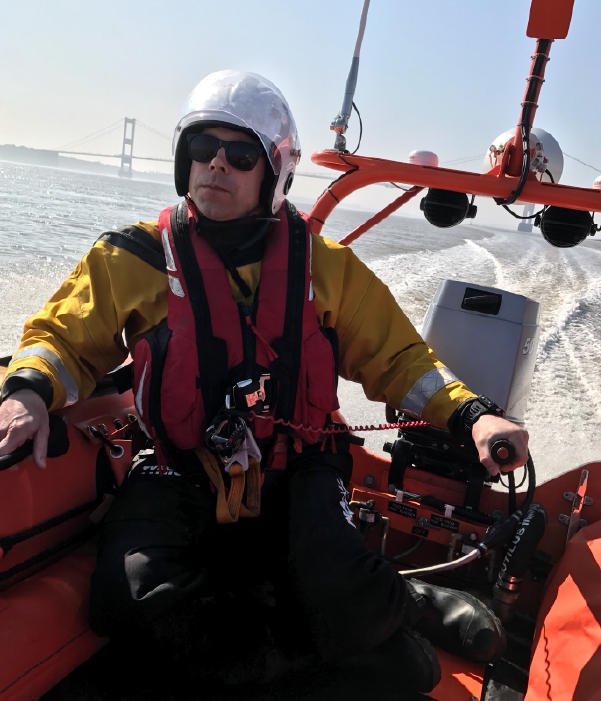
SARA is the designated rescue service for the Rivers Severn, Wye and Usk. The SARA lifeboats, based at Beachley, Sharpness and Newport are tasked by HM Coastguard, largely in response to 999 calls. The River Severn below Gloucester is used for around 350 commercial ship transits per year. The Severn also has many leisure craft transits between Gloucester and Sharpness, and between Sharpness and the Bristol Channel. The tidal range on the Severn at Beachley, and on the Wye at Chepstow, is 15 metres (the second highest in the World!), which means that the river changes within a few hours from a wide expanse of deep water, to narrow shallow channels weaving through extensive sandbanks.
In addition, the tidal current on the Severn reaches 12 knots, with the fastest flow at Beachley itself; this can lead to very turbulent river conditions in even a moderate wind.
Most of the way to Gloucester the riverbed is very broad, with a narrow and winding navigable channel, marked with numerous buoys, beacons and transits. The margins of all the tidal rivers have wide and thick mudbanks below the high-tide levels, and in places the exposed mud leads out to rocky islands at low tide.
In addition, the tidal current on the Severn reaches 12 knots, with the fastest flow at Beachley itself; this can lead to very turbulent river conditions in even a moderate wind. Most of the way to Gloucester, the riverbed is very broad, with a narrow and winding navigable channel, marked with numerous buoys, beacons and transits. The margins of all the tidal rivers have wide and thick mudbanks below the high-tide levels, and in places the exposed mud leads out to rocky islands at low tide.